Refugee Camp Campus
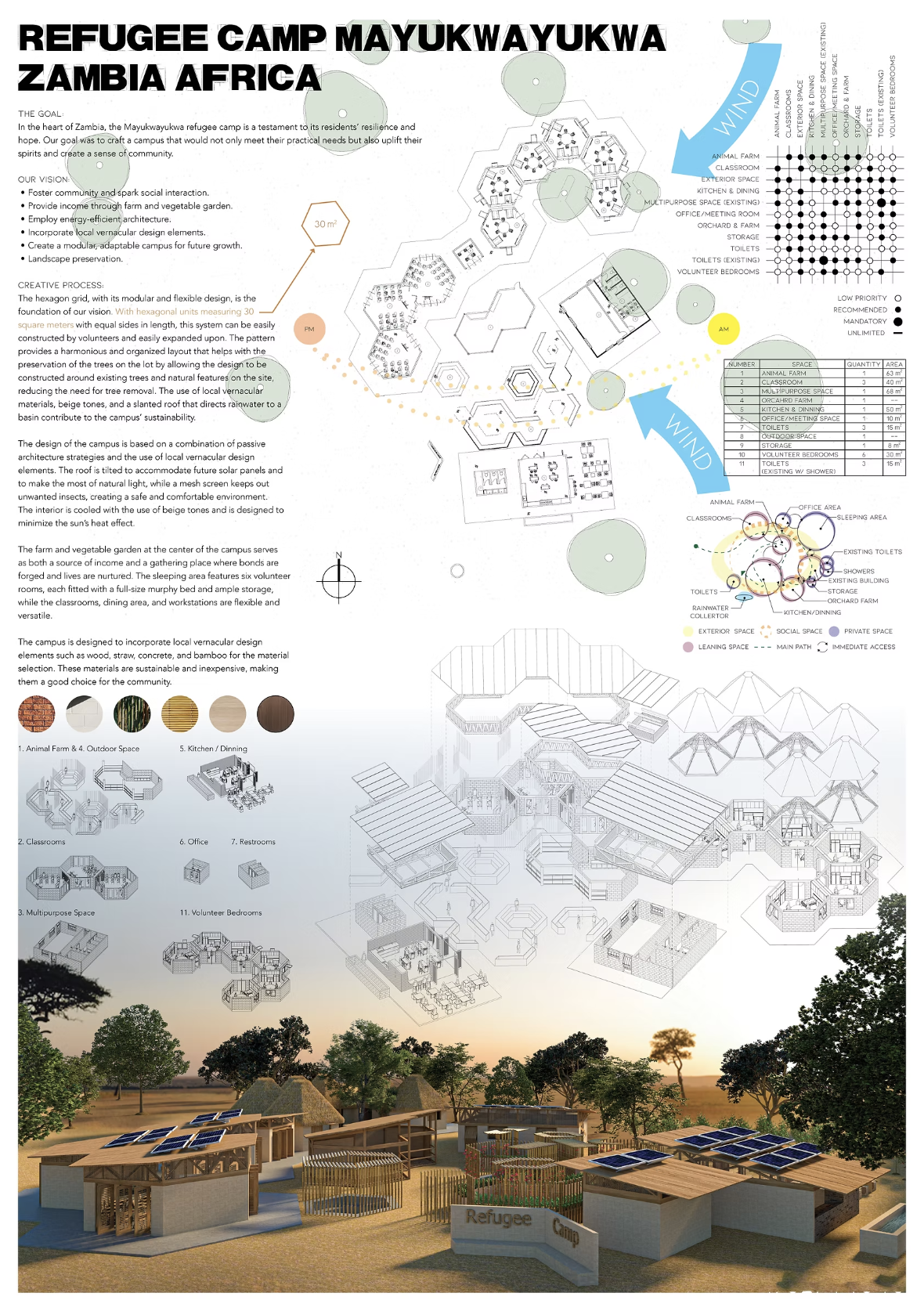
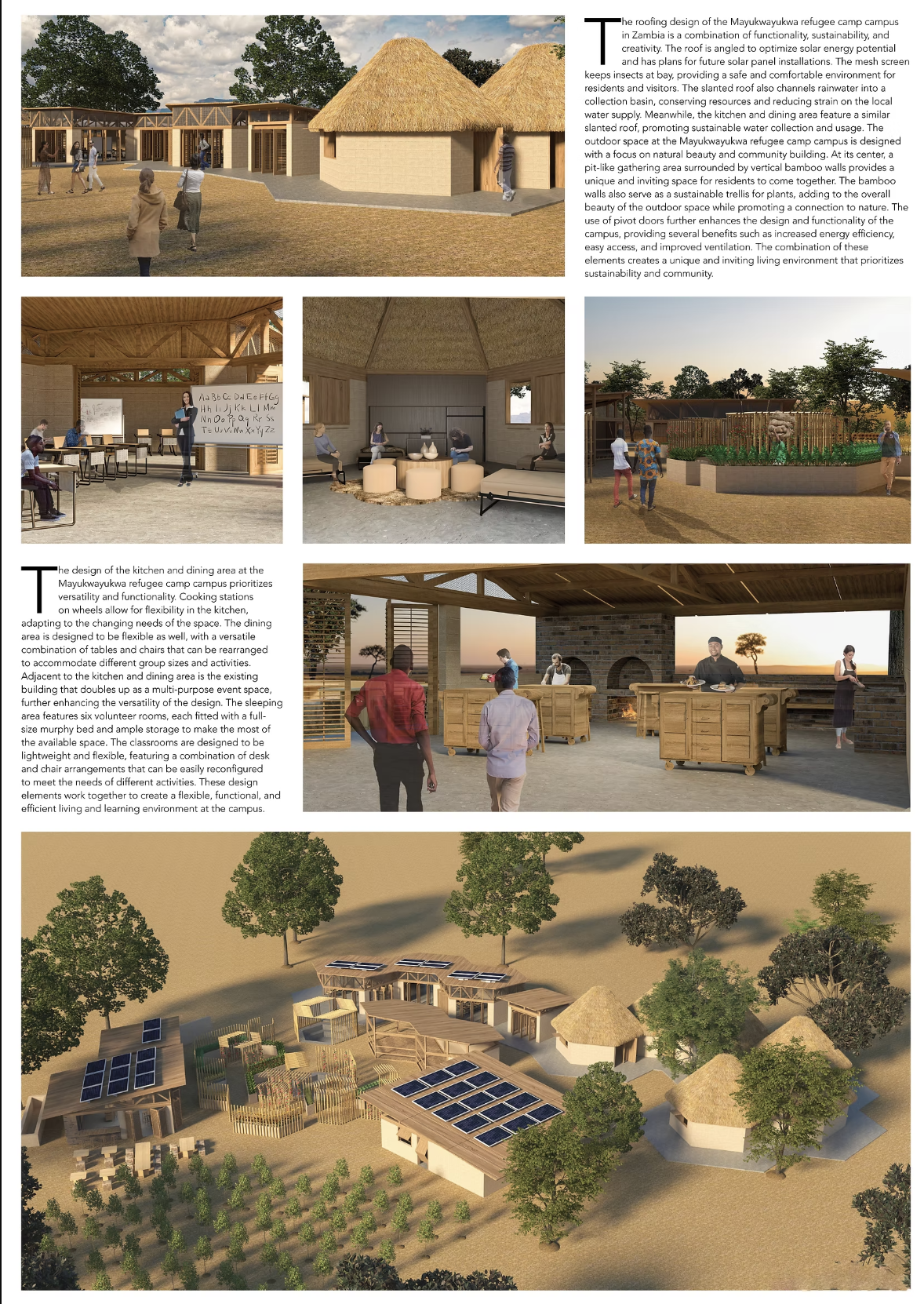
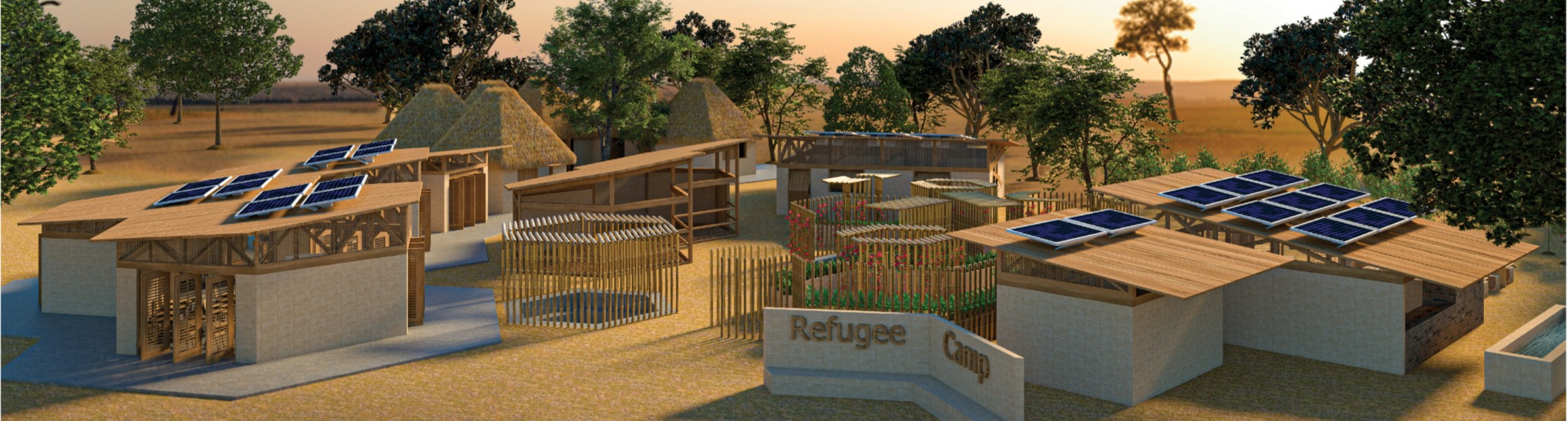
Type: Architecture & Landscape Design Duration: 10 Weeks (2022) Core Values: Sustainability, Vernacular Design, Community Empowerment, Scalability Project Vision Located in the heart of Zambia, the Mayukwayukwa Refugee Camp Campus is more than just a shelter; it is a beacon of hope and a testament to the resilience of its residents. The goal of this design was to create a modular, adaptable campus that meets practical needs while fostering social interaction and a sense of belonging. By integrating educational spaces with sustainable agriculture, the project empowers residents to build a self-sustaining future. Architectural Innovation The Hexagonal Framework: The foundation of the design is a 30-square-meter hexagonal grid. This modular system allows for flexible expansion and easy construction by volunteers. The geometry is intentionally organic, enabling the campus to be built around existing trees, thereby preserving the natural landscape and providing immediate shade. Climate-Responsive Design: Roofing & Energy: The slanted roofs are precision-angled to optimize solar energy potential for future panel installations and to channel rainwater into collection basins, addressing local water scarcity. Natural Ventilation: The use of pivot doors, bamboo screens, and mesh partitions keeps insects at bay while promoting cross-ventilation. A beige interior palette further reflects heat to maintain a cool, comfortable indoor climate. Vernacular Materials: To ensure cost-effectiveness and cultural relevance, the campus utilizes locally sourced materials such as wood, straw, bamboo, and concrete, blending contemporary structural needs with traditional African aesthetics. Programmatic Features The campus is divided into specialized zones designed for versatility: Learning & Living: Classrooms feature lightweight, reconfigurable furniture to support diverse educational activities, while volunteer housing is optimized with space-saving Murphy beds. The Social Core: At the center lies the Orchard Farm and Garden, serving as both a source of income and a gathering place. A pit-like gathering area surrounded by vertical bamboo walls creates an intimate community hub. Flexible Dining: The kitchen utilizes cooking stations on wheels, allowing the space to transform from a standard dining hall into a large-scale event space. By synthesizing passive architecture strategies with modular growth, the Mayukwayukwa Campus provides a dignified, sustainable environment that prioritizes the human spirit as much as the physical structure.